
Core Faculty
Core Faculty are faculty members with appointments to the Environmental Policy Institute.
- Climate change and renewable energy
- Science-policy interfaces and evidence-based policy
- Community-engaged research
- Knowledge mobilization
- Interdisciplinarity and transdisciplinarity
- Deliberative democracy

- Governance research
- Public policy analysis
- International environmental politics
- International relations and global governance

- Sustainable rural community and regional development
- Rural resilience and community adaptation
- Community involvement in natural resource management
- Collaborative, multi-level governance
- Rural innovation
- Community engaged scholarship

- International and comparative political economy
- Political Ecology
- Development and environmental change (e.g. fisheries)
- Environmental politics and policy
Affiliated Faculty
Affiliated Faculty are permanent faculty members at Grenfell Campus who are not appointed to EPI but who maintain an ongoing relationship with EPI, usually by teaching or supervising students in the Master of Arts in Environmental Policy (MAEP) program.
Dr. Stephen Decker
Associate Professor, Environment and Sustainability
Graduate Officer
- [email protected]
- (709) 639-6578
- Integrated Resource and Environmental Management (IREM)
- Sustainable Resource Management
- Public involvement in resource management decisions
- Parks and protected areas planning and management
- Human dimensions of wildlife management

Dr. Camille Ouellet Dallaire
Associate Professor, Environment and Sustainability
- [email protected]
- (709) 637-6214
- Ecosystem Services
- Impact Assessment
- Cumulative Impacts
- Sustainable natural resources management
- Watershed management
- Interdisciplinary Integration
- Large-scale modelling of riverscapes
- Geospatial and multi-variate analyses for sustainability
Dr. Josie Wittmer
Assistant Professor, Environment and Sustainability
- [email protected]
- (709) 639-6536
- Community engaged research
- Critical pedagogy
- Critical data studies / digital geographies
- Environmental governance and justice
- Feminist geography/methodologies
- Infrastructure
- Labour
- Mental health in the academy
- Political ecology
- Waste and discard studies
-
Environmental and energy humanities
-
Environmental history, politics, and visual culture
-
Community engaged research
-
Low-carbon, arts-based, and interdisciplinary approaches to sustainability
-
Environmental media studies
-
Just energy transitions
-
Infrastructure
-
Gender and intersectionality
- Sustainability science: concept and measurement
- The future of the ocean
- The Anthropocene and climate change: ecological economics and the objective value of life
- Relevance of the FAO voluntary guidelines for sustainable development of small-scale fisheries
- The promise of agroecology: small-scale organic agriculture for Newfoundland and Labrador
Adjunct Faculty
Adjunct Faculty are researchers who maintain an ongoing relationship with EPI, but who are not permanent faculty members at Grenfell Campus. They may be available to serve as co-supervisors or on supervisory committees, but not as a student’s primary supervisor.
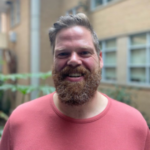
Dr. Evan Andrews
Evan Andrews is a transdisciplinary resource geographer whose research focuses on strengthening fisheries and ocean governance to support small-scale fisheries and the well-being of Indigenous and other coastal communities. His work advances teaching, training, research, and partnership development across Canada through affiliations with Memorial University and Royal Roads University. He is Adjunct Faculty with the Environmental Policy Institute in the School of Science and the Environment at Grenfell Campus, Memorial University. He is also a Senior Research Fellow with the Marine Biomass Innovation project (Principal Investigator: Dr. Kelly Vodden), where he contributes to Work Package 7 on governance, engagement, and knowledge co-production grounded in the Mi’kmaw principle of Etuaptmumk (Two-Eyed Seeing). Together with Vodden, he is co-Principal Investigator of Rethinking Transformation: Centring Msit No’kmaq for Just and Equitable Climate Action, under the leadership of Dr. Erica (Samms) Hurley. At Royal Roads University, he serves as Associate Faculty in the School of Environment and Sustainability and Professional and Continuing Studies. He is also the coordinator of the Canadian chapter of Too Big To Ignore: A Global Partnership for Small-Scale Fisheries Research (Project Director: Dr. Ratana Chuenpagdee), where he helps build partnerships and networks that bring greater visibility, recognition, and support to Canadian small-scale fisheries.

- Environmental Assessment / Strategic Environmental Assessment
- Aboriginal Consultation and Involvement in Resource Developments
- Regulatory Planning and Environmental Permitting

- Inuit history
- Policy
- Indigenous feminism

- Rural coastal community sustainability
- Social innovation and entrepreneurship
- University-community relationships
- Sustainability assessment and monitoring
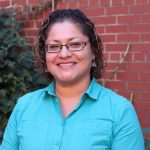
Dr. Mery Perez
Postdoctoral Research Fellow, Office of Public Engagement, MUN Grenfell Campus
- Communication in activism and social movements
- Creativity and Discourse creation
- Rural resilience and community development
- The interface of social learning and policy implementation
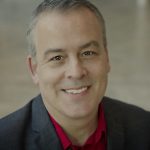
Dr. Michael van Zyll de Jong
- [email protected]
- (506) 648-5630
- Fisheries Management and Ecology
- Ecosystem Based Approaches to Natural Resource Management
- Integrative Research at the Science Policy Interface
Postdoctoral Fellows
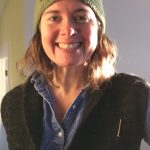
PhD in the Division of Community Health and Humanities, Faculty of Medicine, Memorial University of Newfoundland

Dr. Julie Mallet
Julie Mallet holds a Master’s degree in Business, specializing in Entrepreneurship, from Strasbourg Business School, and a PhD in Entrepreneurship from Kingston University. She is a Postdoctoral Researcher with the Marine Biomass Innovation Research Project at Memorial University of Newfoundland’s Grenfell Campus. Her work explores the intersections of Indigenous entrepreneurship, sustainability, and food production, with particular attention to strengthening community resilience through marine and ecological innovation. She also contributes to food product seminars at Mount Saint Vincent University, serves in editorial roles with Inderscience journals, and has published widely in entrepreneurship and Indigenous studies.
As part of the Marine Biomass Innovation Project, she focuses on Indigenous entrepreneurship within Work Package 6 on Entrepreneurship and Business Development, under the supervision of Dr. Kelly Vodden and Dr. Heather Hall. She supports industry partners and communities in exploring commercial opportunities related to marine biomass. Grounded in the Mi’kmaw principle of Etuaptmumk (Two-Eyed Seeing), her research advances knowledge co production through marketing research and business planning that help communities shape their own marine-based entrepreneurial futures.